





What role do care and compassion play in the leadership that is needed most, today and into the future?
As it stands, the prevailing concept of leadership has been characterized less by care and compassion and more by dominance and single-minded drive, guided by a worldview that frames organizations primarily as machines. But when we recognize our organizations as living ecologies, the vital role of care and compassion comes more fully into view. Purpose expands and deepens into “thrivability” — into cultivating life’s ability to thrive. Leadership is recast as stewardship, tending the conditions for system health and regenerative capacity. And compassion and care are integrated as core strategic and collective practices, rather than incongruous add-ons to managing the machine.

This evolution is essential not only for effective governance and organizational performance but also for unlocking critical responses to the perils and possibilities of these times. I believe nothing could be more important.
Compassion and care are integrated as core strategic and collective practices, rather than incongruous add-ons to managing the machine.
My Story
This shift in perspective and practice has been the focus of my work for the past twenty-five years, in contexts as far-ranging as tourism, life sciences, education, eldercare, and agriculture. Across all of these, I offer a set of ecological principles to help people cultivate the conditions for life to thrive at every level for themselves, for their projects and organizations as living ecosystems, for customers, community, and the biosphere. Though this evolution of assumptions and habits can be disorienting or even confronting, there is also a sense of deep truth that many recognize. “What you’re telling us goes against everything we’ve been taught for the last thirty years,” said one seasoned organizational development consultant. “And at the same time, it feels like home.”
What I have seen is that the intellectual and emotional stretch is well worth it, helping teams find their way to more effectiveness, more meaning, and more of what is truly needed for their contexts and the world. When embraced fully, this work promises remarkable outcomes in which:
• Workers and customers experience more vitality, joy, justice, learning, self-expression, and self-awareness;
• The organization achieves its intended purpose creatively, gracefully, and resiliently while attracting necessary resources;
• The community discovers more connectedness, creativity, resilience, and self-reliance;
• The larger ecologies we are part of are supported in their ability to be healthy and regenerative over time.
Indeed, a word I hear often in my work is “healing.”
I came to this focus in my work after the disillusionment of working in brand strategy within emerging markets for two multinational companies. I sensed that something essential seemed to be missing in how and why we engaged customers and the community. We were highly effective at manipulating people into buying something they generally didn’t need and that largely didn’t contribute to community wellbeing. On top of that, both companies had cultures characterized by fierce internal competition. None of it made sense to me.

In what felt like a courageous leap, I moved to a small organizational development consulting practice, working with leadership, culture, and systems. And, for the most part, it felt better. But I also noticed disturbingly familiar patterns. The leaders who were our clients simply wanted us to tell them what buttons to push to get their employees to work harder for the same amount of money. It seemed a far cry from what must be possible and even needed.
Meanwhile, more of the world was waking up to persistent and worsening societal challenges, like ecological breakdown, homelessness, and social division. With all of our intelligence and technological progress, I wondered why we could not solve these problems once and for all. Again, it seemed clear: something was missing in how we conceive of our role and relationships in the world.
Leadership is recast as stewardship, tending the conditions for system health and regenerative capacity.
What we are evolving beyond
This is when I started to notice a common thread across all of my experiences and observations, a particular worldview that tells us everything in the universe operates like a machine. Nowhere is this narrative more prevalent than in our understanding and practice of leadership in organizations. According to the implicit story, we are all separate from each other, separate from nature, and separate from our organizations — the proverbial “cogs in the machine.” We exist to compete and consume. Profitability and productivity are the things that matter most.
Speed, efficiency, and scale are the most effective means to those ends. More is always better. Everything can be broken down into parts in the interest of prediction and control. “It’s not working? Re-engineer it!” “It’s just business, not personal.”
Within this paradigm, leadership is most often seen through the metaphors of engineering, war, or the journey. The very word “leader” comes from the Indo-European root Leith, which means to go forth or to cross a threshold. With its assumption of linear progression, “here” is never the right place, and “there” can be known, plotted, and overtaken, one milestone at a time. There is an assumption of a single all-seeing leader (or a small number of them). Leadership is a story of isolated conquerors and those who follow them.
In none of these metaphors is it clear that care and compassion have relevance or value. And so, too often, they are interpreted as a means of influence (read: manipulation) to achieve the goal of conquest and control.
This may seem like a caricature, the dominant worldview painted in its most extreme form. And rarely is this the only storyline at play. But there is strong evidence that this underlying logic has shaped every aspect of our lives, from education to healthcare to agriculture and, perhaps most of all, to business.
And of course, there is truth and value in this worldview. But there is also reason to believe that every major problem we face in society can be traced back to the limitations of that story.
An alternative perspective
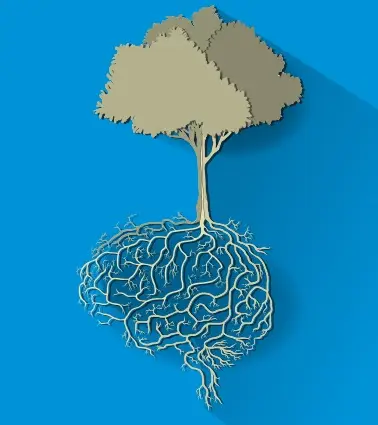
Fortunately, an expanded worldview is emerging at the edges of every sector and every discipline. This story reveals the world not as a collection of simple machines and parts to be controlled but as a dynamic ecology of living systems to be tended.
In business, we see evidence of this new narrative in the growing use of terms like complexity, ecosystem, resilience, self-organization, agility, and creativity — living systems concepts. We see it in the rise of impact investing, social enterprise, and corporate social responsibility — explicit acknowledgments that conquest alone is an insufficient purpose and that we are not, in fact, separate from our context.
The burgeoning concept of regenerative leadership offers the latest and clearest indication of the shift; after all, only something alive is capable of regenerating itself. The concept has been most directly inspired by a parallel movement in agriculture, as farmers find that monoculture, factory farming, and heavy use of fertilizers and machinery — that profession’s equivalent of mechanistic, conquest-driven leadership — steadily depletes soil fertility, diminishes nutrient density, and erodes profitability. In response, there is a growing acknowledgment that it is not the farmer who grows the plants, with their chemicals and heavy equipment; it is the living ecology of the soil. The farmer’s more effective role is to support and participate in that local ecosystem’s generative and regenerative capacity and to respond to its unique, unfolding potential. As the soil regenerates, both farm and farmers flourish. The outcome over time is a more resilient, abundant ecosystem at every level, including economically.
To act on this promise, the starting point is to acknowledge more of the complexity at play.
This is the great promise of regenerative approaches in every context, including business and community. This is what becomes possible within a worldview centered around life.
On complexity
To act on this promise, the starting point is to acknowledge more of the complexity at play. In living soil and living organizations, we find what I think of as “life’s universal design principles.”
• There are individual parts, with vital diversity of perspectives and contributions.
• There are patterns and structures of relationship, with complex interdependencies in continuously unfolding process and flow.
• There are new characteristics, capabilities, and needs that emerge at the level of the whole system.
• There is life, therefore there is potential that cannot be predicted or controlled but can be sensed and served with ever greater attunement and wisdom.
• Context plays a key role within the fundamental nestedness of all living systems.
To improve the health of a system, connect it to more of itself.
Applying these principles in human contexts, we discover a set of corresponding strategies. To cultivate generative and regenerative capacity in our projects and organizations, we can:
On purpose
As we actively tend to these conditions, we cultivate thrivability, supporting our organizations and communities to:
When we see our organizations and communities as living ecologies, this becomes the obvious purpose of our efforts: enabling ever more of life to thrive, evermore. Conquest is never the singular purpose of any system’s existence. Instead, it is to participate in broad system health and to contribute to the generation of new possibilities. Everything else — every product or service, every strategy and tactic — is our unique choice of method and means to that end without end.

On stewardship
With this perspective, leadership comes to be understood more broadly as stewardship. It is less a role or a title and more a commitment to work both in the system and on the system, in the individual and collective practice of tending to the needs of parts, relationships and multiple layers of wholeness. It is offered from a stance of reverence for the life in each of us and between us, as well as for the transcendent potential that we may express together.
Importantly, there is no straight line in a living ecology, as the journey metaphor would have us believe. The goal is not simply to move from place A to place B. Instead, the steward aims to grow roots and become ever more integrated within a particular landscape of shared context and intention. Like the regenerative farmer tending the soil, the work is to continuously cultivate a learning ecology, growing connections, and continuous feedback, creating a field of deepening wisdom from which effective action can emerge. As Margaret Wheatley advises: “To improve the health of a system, connect it to more of itself.”
There is also no single leader in a living ecosystem. Instead, all the parts participate in self-organizing patterns of responsive relationship and emergent wholeness. In even the simplest of organizations, no one person can know everything that the system needs, to anticipate all of its potential and coordinate its full complexity. Stewardship is necessarily a collective practice. This is how we draw on the full intelligence of the systems we steward.
This is not to say that everyone has an equal voice or status. There are always some who can see more of a system than others, either through inclination or role. They may be authorized as the primary steward of a project or an organization, with the recognition that they derive their privileged perspective from the system and they are responsible to the system for representing that collective view. This is in contrast to the prevailing concept in which a leader acts from self-authority as if they are standing apart from the system and directing it.
Stewardship is better understood as by and for “careholders,” a concept that may include future generations.
On Compassion and Care
Such stewardship has two primary practices at its core:
1. Continuously sensing the needs of the ecologies we form together, in the practice of active compassion.
2. Responding with wise, effective action, in the applied practice of care.
Well beyond the interpersonal kindness of a leader toward a follower, this is a shared practice of compassion and care for the wholes that we form together. Specifically, it calls for methods of convening and discernment. And it requires strategies of ongoing engagement and learning.
And well beyond shareholders or even stakeholders, stewardship is better understood as by and for “careholders", a concept that may include future generations and non-human beings and systems.
What this looks like in practice
In my work, this has looked like a municipal tourism authority reconceiving their role from “managing the tourist destination” to “cultivating the hosting community." It has involved reshaping strategy to draw businesses, citizens, and government together in ongoing shared stewardship of community wellbeing. The outcome has been increased community cohesion, the consistent attraction of resources and support, the development of inspired offerings that serve both visitors and residents, and improved economic resilience.
It looks like the Chief Operating Officer of a fast-growing biotech company bringing together Facilities, IT, People, Finance, and Legal into a unified department called "Stewardship." It has involved a two-year process of developing more connection and flow, inviting more diverse perspectives, and helping people sense and serve the needs of the whole system together. The result has been a transformation from fragmented, struggling, burned-out teams to more joy, effectiveness, and adaptiveness across the whole organization, as well as the ability to attract a key contract in a challenging market.
"When we truly acknowledge the life in and around us and our ability to create the conditions for life to thrive, new visions of reality become apparent."
It also looks like a large non-profit whose commitment to "caring leadership" was creating a problematic parent-child dynamic, with rising cynicism and a sense of "us and them." The response has been to nurture the philosophy and practice of shared stewardship. The result is a greater sense of mutual responsibility, new ideas for improving services and operations, and more satisfaction at work.

Implications
This is the necessary near-future of governance. The promise is that every project, organization, and community may become a practice ground for learning how to work with complexity, difference and change. These are vital skills for a society that is more resilient, caring, and aligned with the needs and limits of the biosphere. Indeed, this is perhaps the greatest responsibility of our organizations and communities today.
As I wrote in my book, The Age of Thrivability: "When we truly acknowledge the life in and around us and our ability to create the conditions for life to thrive, new visions of reality become apparent: new possibilities, new goals, new priorities and new actions. In embracing the perspectives this story of thrivability offers, we become more active and intentional participants in life’s process. Along the way, we find a path to richer meaning, greater compassion, more effective collaboration, healthy regeneration and renewal, and more thriving, in all senses of the word."


