



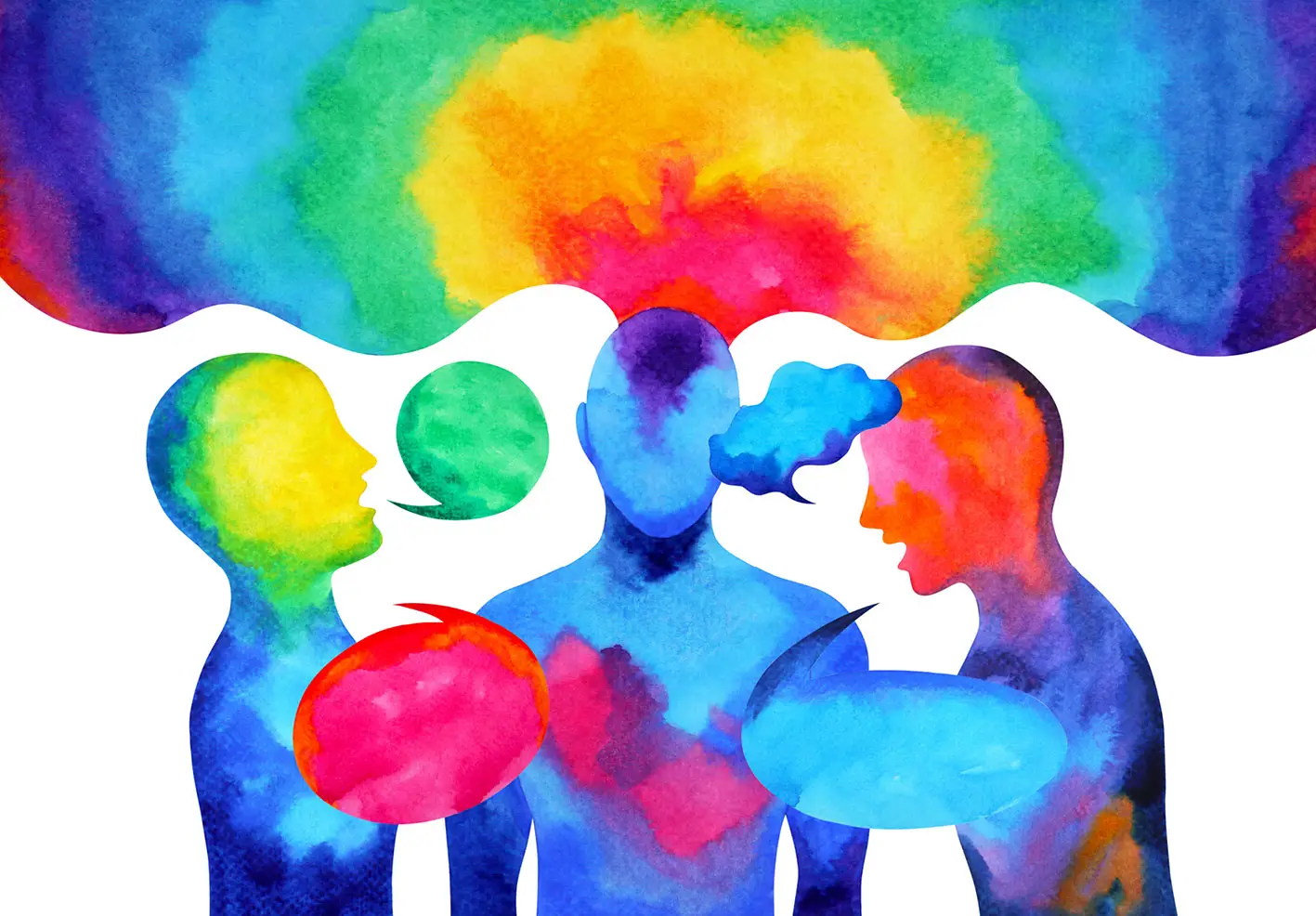

Beyond every role in an organization is a human mind and heart pulsing non-stop. Our 100,000-year-old brain is far behind in the evolutionary process and is grappling with digital realities. The core of human fabric is constantly challenged and compromises to this very fabric are becoming real and frequent. Leaders at work continuously strive to match the speed of change while retaining their humane selves, balancing emotional intelligence, c are, and compassion while leading. Conscious, emotionally intelligent workplaces are gaining attention in a ruthlessly competitive world. Organizational intricacies have seen context, content, data, and talent as frequently shifting pivots. Modern organizational life is very complex and stressful.
Many things have changed. I am unable to believe that innate human behaviors care and compassion are now taught and are part of Leadership curricula. That is how complex we have become and how complex we have made the world. I come from a space where, as an HR Leader, you were expected to know every employee and understand her as a person beyond work. Today, I co-exist with a workforce in which chatbots respond to my queries and AI suggests the best actions for me. This reality has left me baffled and I am adapting like most others to figure out a way to co-exist with these inflections.
In hindsight, did I imagine an app that would remind me to breathe, drink water, walk, or monitor my heartbeat? Things that I thought were part of me are now beyond me and in some form, I feel a faint sense of external control over my core. I am in the middle of a techno-human evolution and forces from both ends beckon me. Multiply this view by millions of employees worldwide, the result can be astounding.
Humaneness will be the pivot for high-performing organizations, better societies, and holistic humanity. Workplaces that nudge for the best in empathetic relationships from employees and external partners are an act of art and science and breed an ecosystem that is committed to holistic living and wellbeing.
Alongside all of this, we are experiencing humanity and altruism in graded shades. The need for human connectconnectionsver been higher. Care and compassion are the new textures for a societal fabric and different textures evoke varied emotions.
Care is the new cure, and the quest for Soulful workplaces is on.
Let us step back a bit.
What are a few turbulences and tensions that are keeping leaders awake and what are a few challenges that stare at us now?
1. New inter-generational behaviors At work, we have a multi-generational workforce experiencing the human fabric differently. The multi-generational workforce is battling the real world of physical and emotional insecurities and threats. The world has pushed them to be in a constant “Flight or Fight” mode. Gen X saw stability and loyalty in the social fabric and care and compassion reigned supreme, while Gen Y and Z are facing huge shifts in the ecosystem of work and life. The need for acceptance is at an all-time high. Social media validation, pride in their video post going viral on the internet, mobile phones as a companion and anchor, and tapping into information at the click of a button are behavioral shifts that leaders are grappling with when it relates to the current generation. Acceptance, Acknowledgement, and Recognition are constant asks from this generation.
I am in the middle of a technohuman evolution and forces from both ends beckon me.
2. Shorter loyalty spans: Leaders are also facing shorter loyalty spans. From a generation that joined and retired from a single organization to a generation that explored multiple organizations in their career span, to a gig workforce that is comfortable with short, skill-focused engagements, leaders are forced to accept these changes. The only constant through all of this has been the human continuity of care and compassion. The need for a dopamine serotonin high through humane acts has been a constant.
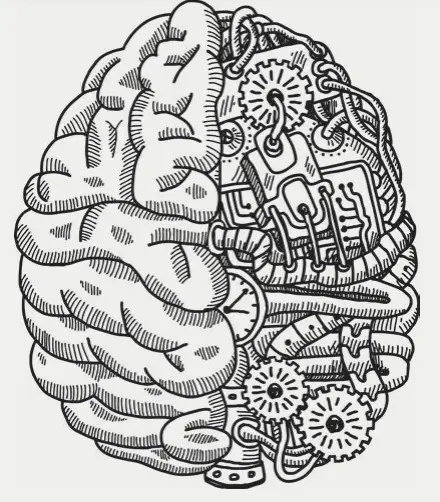
3. Narrowed attention spans: The digital information overload and paradigm of endless choices have left the workplace with a fraction of the attention span that must be shared between work, social media, and personal time.
4. Conventional authority and hierarchy being questioned: It is a common ask from the current workforce that a leader be more of a friend rather than be friend.
5. Work-life integration: Being able to see career as part of life and not vice-versa.
6. Other challenges Networking opportunities, the ogy revolution, a demand for work-life integration, a sandwiched space for themselves with limited scope for expressing themselves fully, wier evolving expectations from across the organization, and the mandate to adopt and adapt to changes are challenges that Leaders face.
7. Evolutionary pace of teams: Aspects such as right brain vs. left brain thinking in a fast-paced world; intellect vs. emotion at the workplace, speed of thought and ideation are sizeable evidence of a faster evolution of our workforce.
8. An expansive Gen Z’s desire for: purpose, family time, sabbaticals, short-tenure skill-enriching jobs, fun@work, travel, and opportunities to satiate their materialism.
Our preparedness to listen deeply, empathetically, and to understand is a game changer for many workplace relationships.
How should leaders engage with a workforce with varying needs, asks, learning, and maturity curves?
1. Hit the “Pause” button frequently: To lead a multi-generational, demanding workforce who have moving goal goalpostsvolving expectations, the need for a leader to hit the “Pause” button to nurture her mind, emotions, and soul mindfully is imperative. Add in the element of empathy for the world around et voila!
About a week ago, at lunch, a leader who had a difficult reputation, asked me how I maintained a calm and serene smile and added, “You have a graceful presence always”. This is not new to me. Many people have complimented me for that. On reflection, I know it has not been an easy journey. It has taken me a conscious effort to become who I am. Gracefully accepting situations, people and outcomes have chiseled and channeled my mind, heart, and soul. Leading with logic, empathy, and care has taken me years of practice.
Listen with intent, and listen to understand: As leaders, how we engage with a spectrum of employees makes a mark. Our preparedness to listen deeply, empathetically, and to understand is a game changer for many workplace relationships. As leaders, it is also about how we say things, not just what we say.
During a performance feedback conversation for a young, high-potential employee, I had to convey the message that he needed to collaborate with the rest of the team. As I shared my feedback, his immediate response, in a slightly raised voice, was that he was delivering his work par excellence and had helped his team as needed. For a moment, I did not like his response, particularly the raised voice. I observed a fire on his face while he tried to battle his emotions undeunderneathagedaged emotions used the tone of my voice assertively. It was gentle yet firm, I recall now. I stressed collaboration however added, “Is there any way that I can be of help?” That was the game-changer. He instantly opened up, shared all his piled-up challenges, and let his emotions flow. I listened intently and realized that he needed acceptance from his team more than anything else. Taking this away, I spoke to the team in a different context and positioned him in the team positively. In a matter of weeks, the high-potential employee briefed me about how excited he was to be part of the team and how much he enjoyed working there. Two powerful lessons that I learned: What we see and hear need not always be true; there could be underlying emotions that can prevent people from being who they genuinely are. This incident emphasized the need for leaders to listen beyond the unsaid.
2. Don unbiased lenses: When dealing with teams, try to create compassionate experiences that can go a long way in getting work done while wearing unbiased lenses. In a world where humanity is searching for an identity, there is not one person in the world seeking seclusion or solitude. Our world is a sum of every individual’s primary and secondary socialization. This impacts the way each of uobservessintegratesrate, and solidifiesidify our life narratives. We use this lens to filter people. Honestly, this one step can pull us back severalfold while building positive, trusted relationships.
Unbiased lenses for people can better our ability to listen, empathize, and create compassionate experiences for our teams.
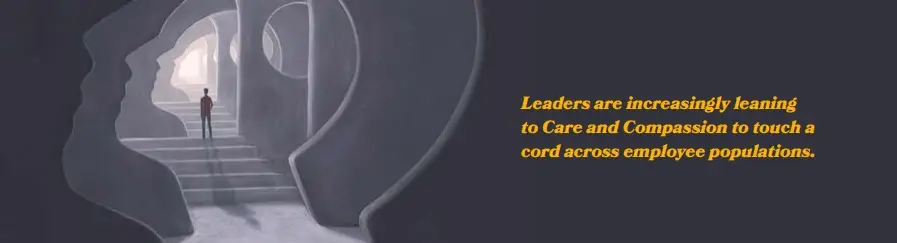
3. Leaders must stay clear of self-doubt while leading. Our experiences should not mask our ability to accept people the way they are. Our fleeting moments of angst or anger should not mar our leadership sanity. The biggest question that is on most leaders’ minds is “Who am I in this congregation of changes; am I good enough for the world of today?” Most indicated that they are at a crossroads when they think about balancing the human fabric with the current social ecosystem. My conversations with several leaders over the years have left me curious. I am observing that leaders are increasingly leaning toward Care and Compassion to touch a cord across employee populations.
There is much work to be done continuously and consciously both by leaders and their teams. With the reality that we as humans will continue to retain Care, Compassion, Empathy, Intent, Humaneness, and Deep Listening even while change strikes us from everywhere, the least common multiple becomes the “Human Factor” in observing, assimilating, and interpreting workforce patterns at the workplace.
A peek into the employee mind space
Employees are seeking answers. Constantly. Answers to questions like: What makes me happy? What keeps me happy? How do I stay happy? These are questions at work. Modern employees care for the past, the current, current present the the future: purposed, purposeful, and purposeful workplaces.
A natural extension then is, “How can employers create purpose-led workplaces while leading a purpose-driven employee base?
Why are we seeing this? The pandemic left the world with scars and wounds. It also provided ample time for families to reunite spend time with each other, and make deeper connections with their passion and purpose.
The Power of Care
Care is thee the ure. Care is power. Care can foster a compassionate workplace. When care exists, there exists acknowledgment, support, understanding, well-being, positive interactions, and a positive workplace.
Care is now a Unique Selling Proposition and the new Employee Value Proposition too.
How can we build a Culture of Care and Compassion?
We cannot undermine the role and impact of Care, Compassion, Empathy, and Emotional Intelligence in business customers, stakeholder management, people ecosystem, Leadership, Collaboration, and Credibility. While technology will continue to be a pillar for revenue, speed, and scale of work, the latent aspects of human relationships still emerge on top when it comes to conflict management, driving outcomes, or credibility building within and outside of organizations.
Leaders who dip into their reserve of human sentiments can take people along. The trusted bond and respect that leaders experience in being vulnerable is understated. Empathy and Trust as levers continue to drive organizational productivity.
• Be a role model for Listening and Compassion.
• Steer with empathy while driving holistic wellness
• Recognize and appreciate teams: There is no better magic wand than the power of appreciation in nurturing a culture of care and compassion.
• Seek opportunities to express gratitude for the efforts put in by teams.
• Create a respectful, and inclusive environment.
• Push for managers to make time for their teams, the power of connect is unparalleled.
What types of Leaders are admired in the current world context?
The modern employee is more driven by impact-creation, purpose, and balance than just maximizing income. Leaders with intent are cherished because their genuineness in them makes them stand apart. Leaders who thrive in a complex world with agility, with the ability to “Show Up” for teams, dare to accept that they do not know it all, have the heart and logic to provide growth and learning opportunities and Leaders who inculcate self-discipline to make time for personal and professional connects have a loyal following. Leaders with an ability to regulate their emotions, who are rooted, and balanced are most sought after in this chaotic world. Leaders enabling employee growth are admired. I have seen this repeatedly throughout my career across multiple organizations.
The latent aspects of human relationships still emerge on top when it comes to conflict management, driving outcomes, or credibility building within and outside of organizations.
Why focus on care and compassion?
I believe that in an increasingly materialistic world, the old-world charm of humanity still reigns tall. Humaneness helps in mental beginning, being able to go to bed with peace, and small moments of giving have shaped our career. Being humane is a serene and responsible feeling in an insanely competitive world.

Scientifically, data points to care and compassion as pillars of mental well-being and health. Altruism has paved the way for soulful workplaces. Workplaces that foster a sense of belonging, connectedness, and camaraderie see high levels of employee engagement and people retention, the two people focus levers in every organization. A sense of being trusted and valued in the workplace also ensures employee tenure in an organization. When this is coupled with empathy and compassion, the results are manifold.
The human brain is receptive to leaders who care, are compassionate, and truly role model goodness without expectations. Employees who work with such leaders willingly stretch themselves to give their best, are eager to contribute, e and have their leader’s back in challenging situations.
Workplaces that foster a sense of belonging, connectedness, and camaraderie see high levels of employee engagement and people retention.
Creating a culture of care and compassion is a long-term journey. It can start with baby steps, one day at a time, and can result in a grounded, purposeful workplace. The question that arises now is: How can we create a culture of Care and Compassion? Culture, simply put, is the way we do things. The way we do things stems from the way we behave, and the way we behave stems from the way we think. Working on our thinking process is the most complex element, yet becomes much simpler when we can form habits through rituals, tasks, and consistent reminders to ourselves to do things in a certain way and to remember what to embed. Care and Compassion need reinforcements sadly in today’s world.
Here are a few perspectives to consider while infusing Care and Compassion as levers to Leadership.
• Role model care and compassion in small steps, in every situation to ensure incremental impact on Culture;
• Communicate the impact of a compassionate and empathetic culture on Customer centricity, and how listening deeply and listening to understand creates wonders for customers;
• Socially, recognize leaders who display care and compassion consistently at work.
Soulful workplaces are engaging, motivating, and productive.
Soulful workplaces with care and compassion as peace forces are powerful at work. Such workplaces are engaging, motivating, and productive. Deliverables are delivered with a quiet sense of joy and altruism. While care and compassion are not the sole factors for career growth, they are two factors that can work favorably for us in difficult times. They act as invisible voices in our favor when we are not present in the room.
Workplaces and culture are evolutionary. Their evolution is mental duringcological and emotional upheavals. The brain tries to hasten its attempt to adapt and we experienced this when COVID hit us. We were at our human best as we adapted to new ways of working while working through losses and being challenged with the empty. This showed us the leadership mirror in more ways than one.
What are a few lessons I learned as an outcome of the dynamics in the past few years?
• The human psyche stays strong irrespective of the turbulence around.
• Leading with a balance of the heart and intellect has a profound impact while driving results.
• Each leader has a unique DNA and can impact through care, compassion, and empathy.
We are what Carl Sagan said “There is perhaps no better demonstration of the folly of human conceits than this distant image of our tiny world. To me, it underscores our responsibility to deal more kindly with one another to preserve and cherish the pale blue dot, the only home we’ve ever known”. To which I add, “the earth’s rotation has not accelerated, the sun and the moon have clarity in pace while we continue to run fastest to beat ourselves thin. Time to “Hit the Pause button” to slow down and manage the speed of life and its associated changes.
It will not be long until roles such as “Chief Care and Compassion Officer”, Chief Happiness Analyst, and Sabbatical Plan Experts will lead us to serene mental spaces. May care and compassion reinstate themselves and guide the human spirit in times to come. Care is a cure and is not esoteric anymore. What brought us here may not take us there! We need to shift from a mode of paranoia and panic to peace and purpose in the organizational context. Let us together attempt to create soulful workplaces and revive humanity at work.


