








This Idea can be purchased for personal use only here
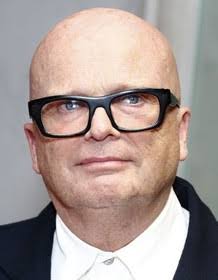
Dominic Savage represents a side of Hollywood that is rarely visible from the outside. There are no red carpets in his description of filmmaking; only the hard, often fragile work of building trust, attracting talent, protecting creative integrity, and finding a way to make something meaningful inside a system shaped by commercial pressure and constant uncertainty.
A three-time winner of the prestigious BAFTA awards (the British equivalent of the Oscars), Savage is known for his highly collaborative approach and for working closely with actors such as Kate Winslet, Elliot Page, Letitia Wright, and Colin Firth.
His films are driven less by formula than by a belief that the best work emerges when actors are treated not as performers executing instructions, but as creative partners shaping the story itself.
His understanding of filmmaking was shaped early. As a child actor in Barry Lyndon under Stanley Kubrick, he was exposed to a level of artistic work that left a lasting mark, and Kubrick remained an important influence throughout his career. His own films are driven less by formula than by a belief that the best work emerges when actors are treated not as performers executing instructions, but as creative partners shaping the story itself.
What makes Dominic's experience valuable to leaders is the conditions under which he works: permanent uncertainty, no guaranteed funding, reputational stakes on every project, and the challenge of extracting extraordinary performance from extraordinary people without authority, without a safety net, and without a formula.
What follows are word-for-word excerpts from a recorded conversation between Dominic Savage and Roland Deiser. We curated Dominic's reflections by theme, with remarks by Roland (in italics) on what they reveal about leadership and the challenge of building work that endures.

On Vision as the Foundation of Freedom.
"I think it was all decided for me, in a way, when I went to film school, the NFTS, one of the top film schools in the world. There was this ethos: the auteur. You had a vision, a mission, a voice. You wanted to do it your way. They encouraged you to be individual and to use filmmaking as a way of saying something in your own way, by making the kind of work you believed in, that was personal, that you felt was individual. The idea of being a jobbing director was not something they encouraged at all. I've kept that ethos going. What I do is make independent films for TV, and some for the cinema. They are always very individual; there's a sense in which I don't see anyone else making them as I make them. There's a strong personal stamp on them. If you follow the system, there's a lot of work that gets made that is very good and very well made, but it all kind of looks the same, feels the same. A drama on Netflix is slightly interchangeable with another drama on Netflix. It's just a different flavour. They want it homogenized.
If I wanted to make money in the obvious way, I probably wouldn't do what I do. Because the subject matter (of my films) is often quite tough things about humanity and society that are not particularly comfortable to watch. These are not easy stories. But I think they're important stories, and I can't imagine doing it any other way."
Roland Deiser: Originality is often treated as a matter of style or personality. In reality, it is a strategic decision, and often an expensive one. Choosing not to become interchangeable means accepting more uncertainty, slower rewards if any, and the permanent discomfort of not fitting into a mould. Organizations celebrate innovation in principle but in practice they often reward conformity. Over time, people learn that staying close to established models is safer than pushing toward something genuinely new. It's a rational response to the incentives in front of them.
It is worth acknowledging what Dominic himself openly admits: the auteur path carries real costs. Not everyone can sustain it. There are easier ways to have a career. But work produced at that level of commitment tends to be the only work that genuinely lasts. In a world where the barriers to producing average work are lower than they have ever been, distinctiveness becomes an important competitive differentiator.
In a world where the barriers to producing average work are lower than they have ever been, distinctiveness becomes an important competitive differentiator.
On Purpose Beyond the Numbers
"It's really difficult to completely define what success is. For me, success is connecting with people, even in a very deep way. I want to make sure that the work I'm doing has something to offer. That people respond to it because it speaks to them, because it means something to them, because it potentially changes them.
Of course, we want to affect a mass audience. But I'm not sure a lot of drama actually does. It can entertain and amuse and occupy people for a bit, but I'm not sure it makes much of a difference. If you can make the stuff that makes a difference, that's what success is for me.
The money is a byproduct, I suppose. Making movies is the wrong business for you if money is what drives you, because there's no guarantee of it anyway. I've spoken to many filmmakers who made a film that was very popular, but they felt they'd sold out, and they didn't feel particularly satisfied by it.
The reward of a big hit is not the bigger. The real reward is where you feel artistically, and in terms of subject matter, that you've really done something that might actually have changed people's lives. When people come up and say, 'I've never seen myself represented like that, and it mattered,' that's the big one.
It's not a job; it's passion. It's your life. It's a vocation, and it becomes part of what makes you who you are. That's what keeps you going."
Roland Deiser: Most organizations define success through revenue, growth, visibility, market share. Dominic's first question is different: did the work actually matter? Did it leave a mark?
That sounds obvious, but it is surprisingly rare in corporate life. We are very good at measuring performance, but far less practiced at asking whether what we produce actually means something to anyone. Meaning is what generates real commitment. Incentives or KPIs merely drive execution; they don't create the kind of engagement that produces work that is worth remembering. When Dominic says money is a byproduct, he is not dismissing commercial reality. Films need financing, just as companies need profit. But when financial success becomes the primary purpose, the work often loses the very quality that made it valuable.
On Collaboration as Creative Method
"They love the collaborative nature of it. They love the fact that I'm respecting them. I do most of the work before we get on set; so then there's a time spent talking and working together, understanding each other. They feel very empowered by the fact that I'm inspired by them. When I meet actors, I meet them with an open mind. I don't quite know what story I want to tell until I meet them. People often ask at a Q&A, 'What inspired you to make this story?' And I say: it's this actor. Kate Winslet inspired me to make that film. And it's true. Normally a filmmaker has a film first, and then starts approaching actors. My way means the actor is already on board, because we've decided it together. I went to meet Kate for lunch at her house with not an idea in my head. And then we just talked about being caring, about relationships, about mothers and daughters, and that became the film.
I wrote the script, but Kate was my script editor, really. I would send her drafts, and she'd say, 'I like that, I don't like that, get rid of that.' It worked really well. That's how I love working.
Meaning is what generates real commitment. Incentives or KPIs merely drive execution; they don't create the kind of engagement that produces work that is worth remembering.
Actors don't want to be told what to do in that rigid way. Working my way means we're always working together, always on the same level. We understand each other, we respect each other and we treat each other well. And it means the shoot goes really well. Every actor I've worked with wants to do it again. That tells you everything."
Roland Deiser: Dominic's directing is not based on command and control; he is describing leadership as an ongoing dialogue. He still holds the vision, but the vision becomes stronger because it is shaped with other people.
Consider what that looked like in practice: he turned up for lunch at Kate Winslet's house with no idea in his head not a treatment, not a pitch. And from that conversation came one of the most acclaimed British films of recent years. Genuine openness to what the other person brings before the agenda is set creates possibilities that a top-down briefing never will. Many leaders still assume that leadership means having the answer first and then aligning everyone behind it.
The opposite is often true. The best outcomes happen when leaders create a space where the right people can co-create and reshape the original idea.
On Reputation as the Only Real Currency
"Reputation is the only currency you've got. Whenever I go to get a project financed, the first thing people say after having read it is, 'This is great but who are you going to get for that role?' It can be a great story, but the question is always: how are we going to get people to watch it? Great actors won't come to see you if you've done nothing. You have to have a reputation for making work that appeals to them. You can't rely on a great idea alone. You've got to have value, and value means reputation.
The actors I've worked with Kate, Samantha Morton, Letitia Wright, Nicola Coughlan they all talk. They say how lovely it was to work together, how collaborative it felt, how respected they felt. You need people carrying your name for the right reasons.
There's the Emma Thompson story. When we were talking about working together, she phoned Kate Winslet and said, 'Dominic Savage, what do you think of him? What's he like?' Kate said, 'He's incredible. You'll love him.' But Emma also asked: 'Is he sound? Is he a good person?' That matters as much as anything else. People don't want to work with a nightmare. They want to know if they can trust you.
What I have now is a really good team. I've got a great DOP [director of photography] who will do anything to work on my film. She really understands what I like. When you have that with a DOP and with the editor,r those are the two key people we know how to produce work at this level. All three of us know what's working and what's not. We just know it."
Roland Deiser: In Hollywood, reputation is a structural element of its operating model. No stable hierarchy or title is protecting you for long. Future opportunities depend almost entirely on what people say about you when you are not in the room.
This is increasingly true beyond filmmaking. As work becomes more project-based, reputation becomes the foundation on which everything else rests. The question is not only 'Am I delivering results?' but 'What do people say about working with me?'
As work becomes more project-based, reputation becomes the foundation on which everything else rests. The question is not only "Am I delivering results?" but "What do people say about working with me?
The Emma Thompson story. She did not just ask whether Dominic was talented. She asked,' he sound like?' Is he a good person? Competence is the entry ticket, but character determines whether the relationship lasts and whether it opens the next doors after that. Dominic's description of his core crew, a cinematographer and editor who have worked with him long enough that 'we just know it,' reveals something important, too: the role of accumulated trust which leads to a relationship capital that is hard to duplicate.
On Constraint as an Engine of Freedom
"One of the reasons I like making films cheaply is that they leave you alone. They're so cheap, they just leave you alone; you get on with it and make it. But the point of making them cheaply isn't just to save money. It's actually more enabling. You keep it simple. You don't spend loads of money on special effects or costumes or sets. You stay focused on what really matters: the actors, the emotional truth, the heart of the story.

The last film I've just finished is really only two actors and a few locations, very cheap to make. But I think it's my best one, because it's really powerful. It's so stripped back, there's nowhere to hide.
Constraint is often seen as the enemy of creativity, but in many ways, it is the very condition for it.
Once something becomes expensive, you go through a much bigger procedure to get the money. There are more opinions, more approvals, more people wanting reassurance.
The actors who come to me are usually the sort who want to take a chance, take a risk. They don't want the predictability of making just another piece that doesn't set them alight. They like that sense of fear. They want to feel they're experimenting, pushing themselves. They hate just turning up, learning the lines, and doing what they're told."
Roland Deiser: Constraint is often seen as the enemy of creativity, but in many ways, it is the very condition for it. Smaller budgets mean fewer approvals, less institutional anxiety, and greater creative freedom. Lack of money fosters resourcefulness. We tend to assume that better work requires more resources. But big budgets create caution and more oversight,ght and both hold back originality. The most innovative work often comes from the edges, from teams who have less to lose and fewer people to satisfy.
Good leadership is about creating enough trust for people to take risks. Dominic's point about actors who 'like that sense of fear' is telling: it is about creating an environment where people are willing to be genuinely stretched, something that rarely happens if there are too many guardrails.
On the Economics of Getting It Made
"This is something Stanley Kubrick understood well. He made challenging films, but he would always bring in a big name if he could: Kirk Douglas in Paths of Glory, for example. A big Hollywood name at the centre of these quite singular films. That got him attention and audiences.
If I Am Ruth had been made without Kate Winslet, it wouldn't have got the heat; it wouldn't have got the attention. It might have been deemed interesting, but far fewer people would have watched it. Kate being involved made it immediately attractive; it changed how people looked at the film before they had even seen it.
I package my own work. I meet actors, I put them together, and I try to arrive with the cast already in place. If you show up with two really powerful names that people want to watch, you're very close to being there.
The BBC rejected [Stephen Graham and Jack Thorne's] Adolescence. They'd developed it there, then it went to Amazon, and Amazon didn't do it either. It shows you that the projects that really work,k that actually change hearts and minds, that get a big audience and win awards, no one saw them coming. If the people commissioning these things really knew what would work, everything would be a success. And it's not. The best ideas often need someone willing to believe before the evidence is there."
Roland Deiser: If you want to realize a vision,n you need something that gives it weight beyond the mere idea. In Dominic's world, that meant having Kate Winslet on board. In business, it may be a trusted executive sponsor, a respected partner, or a first customer willing to place a visible bet. This is why leaders spend so much time packaging ideas, because people are not only buying the concept, they are buying trust in execution.
Adolescence, the series that became a global cultural event, was rejected first by the BBC and then by Amazon. No one saw it coming. The same goes for classics like 'Casablanca' or 'Back to the Future', which was rejected 40 times. The projects that make a difference are rarely the ones the system greenlights with confidence. They are the ones that needed someone to believe in them before the evidence was there.
On the Enduring Standard and Never Quite Getting There
"I remember Stanley Kubrick's producer saying to me: it's never been easier to make films. In one sense, anyone can make a film now. But very few can make a film that really lasts and remains something that's not just good, but incredible. Very few people can do that. That's what you aspire to.
At the highest level, it's really hard to make great work that people remember for a long time. You think about Oscar winners: sometimes you just don't even remember what won last year. But the great ones, you do remember. Those are the films. That's what you aim for.
One of the beauties of it is that you never feel you've got there. You never feel that you've actually won, even if you have. There's always that sense that next time you can really go for it you'll nail it next time. But of course, you never quite do. There's always that feeling that you could have done more, or done better.

As you get older, the work often gets better. A bit more refined, a bit more thoughtful, a bit more daring. I'm finding I'm pushing things more now. I care more, but I worry less about the idea of messing up. I know I won't mess up. Each time you make something, it still feels like the first time you've ever done it. When you turn up on set and do that first scene, it feels like the first scene you've ever shot. You bring all that experience, but there's still the magic of doing it. That's what I love about it, really."
Roland Deiser: This may be the deepest parallel between filmmaking and leadership: the difference between producing output and creating something that endures.
In a world obsessed with speed and constant delivery, it is easy to confuse activity with impact. Technology has lowered the barriers to production everywhere. Anyone can publish, launch, build, or scale. The more difficult question and the one Dominic keeps returning to is whether what we create has enough substance to remain meaningful beyond the immediate moment.
Also interesting is his description of never feeling finished. Even after the awards, there is always the sense that it could have been better. That permanent dissatisfaction prevents you from settling into a comfort zone once you believe you have mastered something. The leaders who continue to grow are almost always the ones who continue to strive.