






This Idea can be purchased for personal use only here
Introduction
How do you make something fun? What is fun, and how do you know when you have achieved it? The goals that drive game development are elusive. The good news is that playing is in our nature, and tapping into play holds the answer.
Game Development is Fundamentally Collaborative
From the outside, game development can look like a mix of creative production and software engineering. In practice, it operates differently. The work is distributed across highly specialized teams, outcomes are shaped through continuous interaction, and many of the most important decisions cannot be resolved upfront.
You can design systems, mechanics, and experiences, but whether something is engaging only becomes clear when people interact with it.
Leading in that environment requires a different approach, one that relies less on control and more on creating the conditions for teams to align, adapt, and make sense of what they are seeing. The following lessons from experience illustrate how that plays out in practice.
Players are Co-Creators
Game Development is unthinkable without the players. You can design systems, mechanics, and experiences, but whether something is engaging only becomes clear when people interact with it. In that sense, it is not about executing a fixed plan; you start with ideas and refine them through use.
This changes the role of strategy quite fundamentally. Instead of defining a target and executing it, you are setting up a series of informed experiments. You build something, observe how people engage with it, and adjust. Over time, the direction becomes clearer, but the game emerges through interaction with players rather than through detailed upfront specifications. That requires a different kind of approach: learning quickly and knowing how to interpret what you see and, critically, recognizing what players are telling you even when they are not using words.
That last point is worth emphasizing, because the most important player signal is not always a complaint or a request. Sometimes it is what players do when you give them innovations and get out of the way.
Many Disciplines - One Experience
What makes that kind of player co-creation possible, however, is an act of collaboration happening inside the studio. Engineering, art, design, analysis, and many more skills must come together to create an interactive experience. It is rarely the case that someone can write a document that defines a game. Technology, art, and rules blend, and unexpected results emerge. A game team has to tinker with these ingredients to innovate and deliver their vision.
Technology, art, and rules blend, and unexpected results emerge. A game team has to tinker with these ingredients to innovate and deliver their vision.
Because they are interactive and can be explored, games are more comparable to architecture, a toy, or a theme park than a movie or TV show. The player can stop at any moment and focus on any one of thousands of contributions from dozens of team members. All those components need to be cohesive and interoperate. If they do not, the game will not make sense, look right, feel fair, or function. Game developers need to create things that stand on their own but also fit into a cohesive vision. The dual requirements of individual and group excellence define leadership and direction-setting in a game team.
Small changes can have outsized effects here. Adjusting pacing, reward timing, or control feel can fundamentally change how the experience comes together. A feature that works perfectly well on its own can feel completely different once it is combined with everything else, sometimes better, sometimes worse. You might solve one problem and unintentionally create another somewhere else.
Consider a straightforward example: a team of artists builds a level with moody sunset lighting. Visually, it is compelling, but the lighting makes it hard for players to see and navigate. The problem only became visible at the point of integration. This is the nature of parallel development: teams can each do their job well and still create a conflict that none of them could have anticipated from inside their own workstream.

That is why assuring coherence becomes a central leadership challenge. The answer is rarely to slow everything down or centralize every decision. It is to build systems that surface those conflicts early automated performance dashboards that flag when something goes out of bounds, and regular playtests that force integration before problems become expensive. As the leader, you cannot personally catch every collision. What you can do is create a work environment where empowered people and processes can achieve this.
Experiment and Learn
A game only has meaning in the moments that players interact with it. Playing the game reveals what works, what does not, and if something is fun. Therefore, play, experimentation, and learning are fundamental parts of the game-making process. Leaders of a game team need the audience represented during development in some form, and they need to balance the elusive nature of fun against some form of failure tolerance in the development process. Some things will not work, and that needs to be part of the plan.
The lifecycle of game development is also different from traditional media. In development, we talk about the 'core loop'. That is a marriage of game mechanics, a context that provides the player with a sense of growth, for example a story or a competitive framework, and a repeatable activity that players can master. The core loop is the foundation of game experiences and game development. You build it, you make it better, and you extend it throughout development.
Leading Without Relying on Authority
Game teams thrive when leaders focus less on formal authority and more on unlocking the intrinsic passion that brings people into games in the first place. Developers are motivated by a desire to shape culture and create experiences that matter to players. The challenge is to channel that energy with just enough structure without smothering it.
Teams that share a clear sense of what they are building will move confidently through ambiguity and solve problems independently. Teams that rely on direction tend to slow down and escalate decisions. Leadership is about creating the conditions for the first case.
What Makes Leading Game Teams Distinctive
• Audience participation: Players bring the game to life, so leaders must 'bring the player into the room' via research, hands-on playtesting, community feedback, and systems that enable user-generated content.
• Learning mindset and deliberate experimentation: Game development demands planned iteration, structured prototypes, frequent builds, and rapid feedback loops rather than a single, linear march to launch.
• High-agency contributors: Small implementation details can dramatically change the experience, so teams need a culture where individuals understand the bigger picture yet have real autonomy to solve, invent, and refine within their domain.
Game teams thrive when leaders focus less on formal authority and more on unlocking the intrinsic passion

Honour passion, then step back.
Game developers are driven by creative purpose and a desire for impact. The first task is to build teams around that shared motivation and make it explicit: why this game matters and how each craft contributes to that vision. Clear constraints are necessary, but the greater leadership skill lies in harnessing the will to create, not in controlling it. Once direction and guardrails are set, you add more value by removing obstacles than by dictating solutions. The goal is not to provide answers, but to remove friction.
Empower small, autonomous teams
Game development involves developing components independently before integration is possible. For example, environments in a game need to be designed and built by specialists before game mechanics can be integrated. Doing everything in serial order can slow down useful iteration. To keep momentum, we empower small cross-functional groups to execute their plans independently. This autonomy respects the expertise of each discipline and builds ownership within self-managed groups. The leader's role shifts from 'decision-maker' to 'context provider', ensuring teams understand priorities, dependencies, and how their work fits into the larger whole.
In practice, this means repeating and reinforcing the overall context continuously. Teams are constantly relying on each other's work in ways that are not always obvious upfront. A gameplay system might depend on animation or a user interface being ready before it really works as intended. Level design often builds on core mechanics that are still being refined. Engineering may need input from design before implementation can move forward, while content teams are waiting on tools or pipelines from tech. As the project evolves, these interconnections keep shifting, and what seemed independent suddenly becomes tightly coupled, and vice versa.
Despite best efforts, teams will diverge and occasionally build things that do not fit together. The key is to make those gaps visible early so they can be corrected before they become expensive.
Use goal setting to establish constraints
What works well is injecting healthy constraints through collaborative goal setting: define the user experience you are aiming for, then ask teams to define their minimum viable product toward that outcome. Establish a regular playtest cadence weekly or biweekly to make 'playing the game' a non-negotiable ritual. This creates natural checkpoints for learning, forces tradeoffs, and ties decisions to the actual player experience rather than opinions or hierarchy.
The idea is that playtests replace abstract debate with something concrete. Instead of arguing in theory, teams can react to what players do where they hesitate, what they ignore, what they come back to. In many cases, that becomes the most objective reference point in the room.
Aim for small, visible wins
Complex, multi-year projects can become abstract and overwhelming. Targeting small, understandable deliverables that everyone can see and react to keeps groups moving in the same direction. Aim for modest innovation in a short slice of the timeline, validate them through play, then build on what works. This incremental pattern ship, learn, improve reduces risk, builds confidence across disciplines, and makes alignment concrete rather than theoretical.
Aim for modest innovation in a short slice of the timeline, validate them through play, then build on what works.
It also changes the team dynamic. When people can see and experience progress together, it creates a shared reference point that aligns discussions much more effectively than plans or documents.
Build transparent rituals and shared forums.
Finally, when authority is limited, transparency is key. It is important to establish recurring rituals and processes that make work in progress visible across the organization: demos, cross-team reviews, show-and-tell sessions, and regular updates on the state of the game. These venues are not just status meetings; they are community-building moments where teams calibrate quality bars, share constraints, and surface misalignment early. Over time, these habits create a culture where information flows freely, trust grows across disciplines, and alignment is sustained by shared understanding.
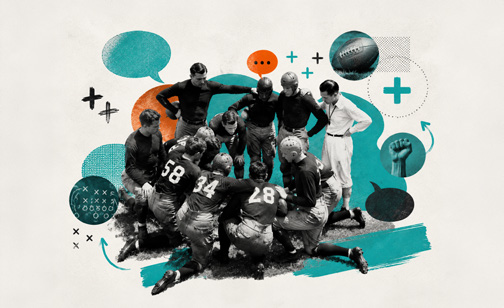
It is important to establish recurring rituals and processes that make work in progress visible across the organization: demos, cross-team reviews, show-and-tell sessions.
Interpreting the Player
Players influence nearly every aspect of what we build for them. Without players, the game doesn't have meaning, so it makes sense that the development process is also interactive. Our job is to give people happiness and fun. We need to reward players for spending their time with us, so we watch, listen, and give them more of what they care about.
People show their taste in games through how they spend their time and what they say. When we launch a new experience, we can see how players interact with it using telemetry from the game. That teaches us a lot and confirms that things are working as expected, or where the player experience is breaking down. But it still only tells you what happened, not why.
It gets more complicated when the results are not as expected. That is when you need to look further. You must go beyond the data and try to understand what is driving the behaviour you are seeing.
It is helpful to validate innovations in a setting where you can observe, listen, and ask questions. This might happen in a small group playtest, but equally it can happen through public testing before a new experience is launched. Listening to players directly, observing their social commentary, and what key opinion-leading players provide are the critical information we need to understand if players appreciate what we are building and why.
What Must Stay Stable and What Must Evolve
The core loop is like the seed crystal of the game that makes it worth playing and helps it stand out in a crowded market. Once established, the game's identity is somewhat rigid. The audience develops expectations. Players may not describe it in those terms, but they quickly develop a sense of what the experience is supposed to be, and they notice when it changes. If you disrupt the core loop too much, you risk losing what made the game work in the first place.
On the other hand, you can extend the core and add to it extensively. As a native digital medium, games are perfect for this kind of evolution. Even small changes to the core loop can make a big difference to the way people experience games. That is a big part of why games can entertain people for so long.
Lessons Beyond Gaming
All media and technology are undergoing a massive shift in the development lifecycle. Users expect things to be more immersive, interactive, and personalized. The concept of a core loop can be a powerful tool to evaluate how your customers experience what you deliver for them.
What do people show up for, how do they achieve it in your ecosystem, and what happens after they get what they need? If you cannot answer that clearly, it is difficult to build something that sustains engagement.
'Core loop' analysis can help leaders understand what people need and expect, but also how your business can deliver more personalized value and how you can organize your workforce around customer behaviours and lifecycles.
The deeper shift is organizational. Once you accept that value emerges through interaction, you need shorter feedback cycles, closer connection to users, and a willingness to adapt based on what you learn, not just what you planned.
That shift is uncomfortable because it reduces the illusion of control as plans become provisional, and outcomes less predictable. Under such conditions, success depends on how quickly you can learn and adapt. But in environments where user behaviour ultimately defines value, that trade-off is unavoidable. Organizations that adjust to it earlier will have a significant advantage. In a world where every industry is pushed toward greater interactivity and shorter feedback loops, game developers showcase an organizational model that embraces radical collaboration, structured experimentation, and tolerance for the unexpected traits that are useful for everyone.


