







By weaving artistic practice into leadership training, executives can gain a profound understanding of organizational challenges and opportunities, facilitating better decision-making. A well-told story appeals to intellectual intelligence by presenting intricate information in a digestible and relatable manner, fostering clearer strategic thinking and visionary purpose. Allow yourself to think differently about leadership for a moment. Just imagine that the issue is not what you know but instead how you know.
The Art of Contemplation
Contemplation in this context is the place where conceptual knowledge meets the non-conceptual. As a leader, it is impossible to make sense of intellectual, emotional, and visceral intelligence connections without resorting to the ‘inward gaze’ of contemplation.
Contemplation in this capacity has the scope to be qualitatively more engaging than thoughtful reflection. Contemplation opens the possibility of rising above the two-sided understanding of right and wrong and instead allows the compassionate response of ‘perhaps’. Leadership that facilitates ‘perhaps’ is more rounded and open to creativity.
As Rumi, the 13-Century poet, puts it in his poem ‘Story Water’ when he says:
“Water, stories, the body, all the things we do, are mediums that hide and show what’s hidden.”
Instead of the fluency of concepts that are available to contemporary thinking, we can explore the alternative intelligence of visceral awareness. Visceral awareness has at its heart the field of contemplation. Contemplation knows what is ‘on’ before reasoning words.
Visceral awareness results in how the body feels with seminal fuller knowing. To be sensitive to how the body responds is a decision to be viscerally intelligent.
A well-told story appeals to intellectual intelligence by presenting intricate information in a digestible and relatable manner, fostering clearer strategic thinking and visionary purpose.
If you are wondering about visceral intelligence, consider first the ancient art of mandalas and the use of images before words. They have a very practical methodology that underpins leadership. It has a visual appearance first, that later emerges as conceptual thinking.
Mandalas
Mandalas are images that act as visual metaphors of self-realization and group awareness. Although mandalas have their roots in Eastern culture, they are pertinent today as prompts of awareness to throw light on current business leadership practices. A mandala (Sanskrit for “circle”) is an artistic representation of higher thought and deeper meaning. Mandalas have been used to explore spiritual, emotional, or psychological work and to focus one’s attention on what lives most saliently behind the surface.
As a leader, it is impossible to make sense of intellectual, emotional, and visceral intelligence connections without resorting to the ‘inward gaze’ of contemplation.
The details of the meaning of a given mandala depend on the individual or peers creating or observing the image, but mandalas in many cultures serve, more or less, the same purpose of centering an individual or community on a given narrative to encourage introspection and, ultimately, an awareness of one’s place and purpose in the world; this awareness then allows for peace of mind.

Below is an example of a management group that decided to explore personal mandalas as a way to express themselves individually as a precursor to talking about how they felt being in the organization.

The creation of a personal mandala is used to explore and posit a reframing of the individual self and relevant organization mores. As such leaders can communicate and share complex concepts succinctly and coherently in a creative way. Through the proactive application of the spoken word and the active use of imagery in synchronicity, it is possible to converse in a much more profound way, the individual’s expression and personal understanding of leadership experientially
What image comes up when you are asked to capture your essence as an image? How is this image influenced by peers contributing to this image? Before waxing lyrical about your potential as an informed ISTJ-type, or as a mover-and-shaker, you may find yourself talking about yourself as a type of tree or a style of boat, as an animal or vibrancy of color, that has pictorially emerged in your image as a leader reframed.
A mandala image adds another layer of meaning to the more familiar use of Post-it notes to explore personal sharing, which too often offers a more limited range of expression.
Organizational reframe
Organizational reframing is a more contemporary exploration of mandalas. A word-based exercise which results in the image above, can become more personal in feedback as one becomes more individualistic in response. Especially as you allow yourself to wax lyrical and use image words and metaphors.
Using written metaphors for actual lived experience and including a few words or a sentence about yourself and your peers might relate to an experience within the organization, such as a ‘cloudy sky’ or ’walking a tightrope’ or maybe the presence of a ‘dragon’ in your team. This process can quite inadvertently, without difficulty expose the participant, making them vulnerable as it creates greater awareness of the organizational underbelly.
The nature of metaphors and images, like poetry, has a natural tendency to be truthful and personal. Poetry is the language of the heart before it becomes the content of the head. Poetry is the domain of picture-building before it arrives at conceptual meaning.
The ‘Big Picture’ of Leadership
To work with the ‘Big Picture’ of leadership you will need to have a working knowledge of the ‘little pictures’ that often govern organizational life. A leader needs to become more aware of how they say what they say.
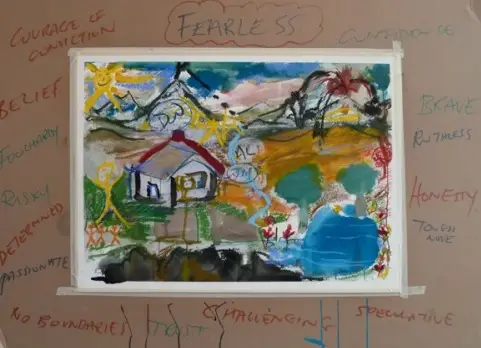
A group of senior managers from a corporate university create a shared image as an organizational reframe. Such an experience affords a sharing that is not possible with words alone. It illuminates contemplation by using color and image.
Your ability to ‘see’ the Big Picture of the organization determines your ability to lead in that organization.
Storytelling can also be an organizational reframe Think for a moment about your living story. As a spoken personal narrative, it is a far cry from the fairytale narrative of Rumplestiltskin or the pictorial comeuppance that becomes evident in the Three Pigs. These stories are by design more like fables with a single point of learning. They are not built to share the complexities of personal narrative. When we speak out loud about our anxieties and triumphs, we evoke compassion and understanding in the listeners.
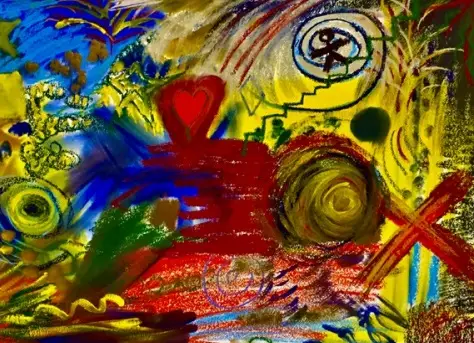
It is also very different from the media saturation of ‘alternative facts’ and spin. Such hyperbole aims to enjoin a certain kind of prescribed attention rather than explore the truth. Such stories do not anticipate a search for a deeper human context. When we talk about the ‘community’ of the business and rather than leveraging personal praise as a relevant signpost for such a community, refer instead to the most significant KPI, we The story of the Odyssey may well be the first story ever written, but it has lessons today for the organization of the future. The questions are as timely today as they were relevant then.

Questions such as:
• Whom do you trust as a friend in the organization?
• Who has got your back at work? Who do you support, whatever?
• What do you do, when you don’t know what to do?
• What do the shadows out of sight conceal?
• What does bravery look like in this organization?
• When does a leader lead the way?
At the very least, learning to speak out a version of the Odyssey as corporate professionals can lead to laughter, telling a good yarn, and taking a risk while sounding authentic and credible. The Odyssey is a rollicking tale of love and loss, of daring to do the unusual, of being driven by fame and treasure, of learning about real trust when the chips are down.
are at risk of not being perceived as trustworthy.
Rather, working with the enlightening aspect of story-making calls upon three types of intelligence:
• The intellectual: The ability of the leader to rationalize, use logic effectively, know the difference between fact and fiction, and apply critical thinking to reduce abstraction and ‘spin’, are all important to demonstrate intellectual prowess in leadership.
• The emotional: The ability of leaders to relate to others, using their emotional intelligence to demonstrate prosody, people awareness, and seeing when character types are behaving true to form.
• The visceral: is most telling when leaders say nothing and instead rely on presence and leadership persona to act out leading the way. This form of intelligence calls upon visceral intelligence to point out an attitude of contemplation that sits in the hub of leadership intelligence.
Storytelling relies on this Wheel of Intelligence.
Storytelling relies on this Wheel of Intelligence. In this frame of mind we can explore the story of the Odyssey, as one of the first ever spoken stories of all times, to ask the questions that have always faced a leader:
• When do you lead and how do you listen?
• How might deeper listening seem like a ‘giving away’ of control?
Another story, The Parzival Legend (the medieval chivalric romance) asks us to discuss the context today of the real difference between the fool and the hero in his escapades to becoming a leader of all those around him. It is worth contemplating for example how might it be a deliberate business manner to appear gauche or naive? When we combine these with artistic expressions such as the mandalas about the self and reframes about the organization, we may find ourselves with more questions than answers.
As the discussion moves away from academic certitude to the challenge of leadership being a very personal endeavor making calls on our integrity all along the journey, it can be a real-time adventure!
It is our job to make sense of all this and luckily we have intellectual frameworks to do this, as well as peers that can be relied on as friends and, hopefully, a refreshing sense of self-appraisal and wonder.

But it also helps no end, to have a practice of contemplation for our leadership. If we are unlucky enough to work with someone who not only does not have a practice but who looks furrowed when anybody mentions storytelling, image making, or artistic thinking, we know what it is like to not have a leader.
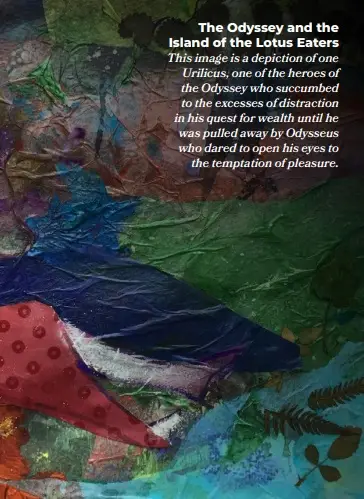
When we can embrace uncertainty, and difficult decisions and meet unruly behavior with joyful abundance, we can be sure that a leader in the organization is not far away. If you are lucky enough to have a fearless leader, chocks away!
Contemplation is in the essence of the ‘Big Picture’ of leadership
Big Picture leadership requires a form of contemplation that is a sophisticated use of the different kinds of intelligence that make up the Wheel of Intelligence. They are intellectual, emotional, and visceral intelligence. Contemplation is the separate axis on which these three intelligences revolve.
Visceral intelligence uses the body and non-conceptual thinking as the center of self-awareness. Emotional intelligence holds others to account. Intellectual knowledge remains constant as the information is common to all.

Contemplation requires the user to put to one side what has taken years to get right. It factors in conceptual thinking as only one dimension of understanding. It respectfully asks the age-old question “What do you do when you do not know what to do?”
Instead of an errant nonsense reply, this question asks from a well-trodden koan perspective. That is, the Zen Buddhist story-type that provokes great doubt, leading to greater insight, often in the form of a paradoxical anecdote or riddle without a solution.
It is the remit of the Art of Contemplation and its concomitant Big Picture leadership.
It asks us to be wise, trusting of the heart, and to take risks. It also may ask us to be fearless.
Head, Heart, and Body
Emotional intelligence is recognized as being crucial in building strong relationships and fostering teamwork. Storytelling cultivates empathy by sharing personal experiences and emotions, enabling leaders to connect compassionately with their teams. This in turn fosters trust, loyalty, and a sense of belonging among team members, with the end-game of leading to a more positive work culture.
Visceral intelligence, as the bridge that connects bodily feeling to what we intellectually know is sometimes overlooked and is crucial to the important role in making experiences impactful. Storytelling can engage the senses and makes for establishing a lasting impression. Leaders who master the verbal art of crafting the spoken word, by being more aware of their prosody (the patterns of stress and intonation in a language), and presence as well as being strong in visually reframing concepts, can evoke emotions better and influence and inspire their teams, driving them by example to achieve exceptional results.
The Next Step
It’s time to take the next step. You can use your head and trust the difference between the Enneagram1 or develop mental models to factor a reliable way forward. You can use the Johari Window 2 or explore the merits of competencies as your organizational matrix.
You can rely on your team for the strengths of a Belbin ‘Mover and Shaker3’ to make a commercial difference. You can know that an optimistic choleric4 has a different plan from you and the more even strategic phlegmatic may take a broader view. This is the team that will shape the future of your organization.
It is you that is a measurement for confidence beyond words, that exudes your leadership style in your self-deprecating laughter as well as being able to see the problem from both sides. It is only you who upholds your time out and your ability to contemplate the Bigger Picture and fashion the next chapter.


