





This Idea can be purchased for personal use only here
Margaret Heffernan has a way of arriving at the obvious by a very long and inconvenient route. She spent years in the BBC, ran three technology companies, wrote seven books, and somewhere in the middle of all that read enough research on forecasting to conclude that one of the foundational assumptions of modern management that we can predict enough to plan is simply wrong.
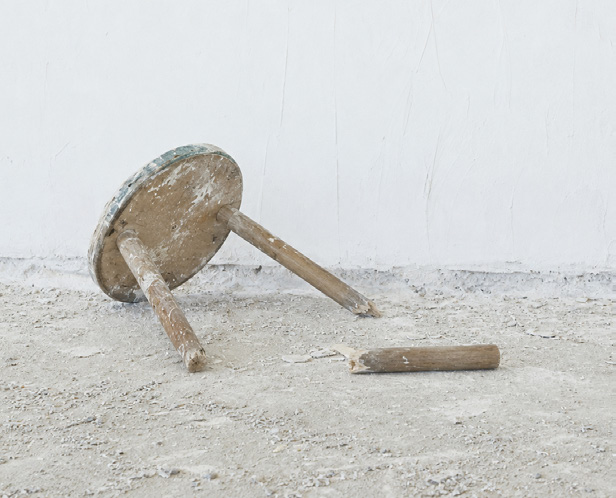
Heffernan thinks of classical management as a three-legged stool: forecast, plan, execute. That is how companies have been run since the Industrial Revolution. What the research on forecasting reveals, however, is that the space of reliable prediction is far smaller than anyone believes, and it is shrinking. "Somebody's just cut one of those legs off," she says. "No wonder life is getting so uncomfortable."
She read enough research on forecasting to conclude that one of the foundational assumptions of modern management - that we can predict enough to plan - is simply wrong.
This is the gravitational centre around which everything else in her thinking orbits: a world that cannot be reliably predicted cannot be reliably managed, and an organization designed for predictability will be brittle by design. The question she has been trying to answer across books, companies, and conversations for years is: what do you build instead?
The Forecasting Problem
Heffernan encountered the research almost by accident. She realized that the accuracy window for forecasting is not just modest; it is actually smaller than assumed and contracting over time. The more she thought about this, the more it seemed to unravel not just strategic planning but the entire apparatus of measurement and control that organizations use to feel 'in command' of their futures.
When she started talking about it, she came across stereotypes such as 'History repeats itself' or 'Genetics is destiny'. But when she spoke with professional historians, not one of them believed that history repeats itself. "It doesn't mean we can't learn from history," she explains, "but the people making a decision now about something that looks similar to something in the past, they know where those decisions led. They are different people in a different time with different information. It isn't a repeat."
The genetic argument sent her deep into genomics literature. What she found was that before a genome is decoded, the certainty that any given trait will manifest and shape a life "hovers around 50/50, which is a coin toss." The argument for predictability, in both cases, rests on the power of analogy: the tendency to focus on what looks similar rather than what is different. "And therefore," she says, "it's deeply misleading. We do not absolutely know the way that I know I'm holding a pencil in my hand. I don't know what's going to happen five minutes from now." This insight leads to a fundamental question: if the future cannot be reliably forecast, what kind of organization is actually equipped to navigate it?
What Artists Know
Heffernan found her answer in the people she had worked with at the start of her career. At the BBC, in film, in music, she had encountered a particular kind of practitioner: people who seemed to have an almost uncanny ability to read what was coming. They would spend years developing a series, assembling funding, building creative coalitions, and somehow arrive at exactly the cultural moment their work was made for.
The example she finds particularly fascinating is the original British version of House of Cards. The first episode aired the week Margaret Thatcher was forced from power. This was not only luck, she believes. Producer Mark Shivas had done it before. The same pattern turned up in music: albums that seemed to crystallize something that was in the air. And in theatre: King Lear was practically never staged for almost two centuries, and suddenly it became the defining play of the twentieth century. Something in the work had been waiting for a moment in the world that was prepared to hear it.
"I became very fascinated in how artists think, how they live, how they experience life and what they do with their experience, because I felt this was an aptitude we were really going to need in the future."
What distinguishes these practitioners is not mysticism but a certain quality of attention. They are immersed in the present rather than modelling the future. They accumulate experience as something that builds a kind of calibration. They are doing something that a great editor or a great jazz musician does: listening so carefully, and for so long, that they know when something is right before they can say why.
This is a capability that organizations are now in desperate need of, but they are almost entirely unequipped to cultivate it. The irony is that it has been there all along if you knew where to look: in the industries that organizations have always regarded as marginal to real business.
Hollywood as Laboratory
Hollywood, in this light, is not just a metaphor for uncertainty. It is a working proof of concept for an entirely different way of organizing. Making a film is a temporary coalition of highly skilled specialists, brought together around a shared project, with no permanent employment relationship, sustained by a dense ecology of trust, reputation, and mutual dependence. It is a highly functional model of adaptability.
There is an important distinction between this and the gig economy. The gig economy is designed to employ people without many skills at a very low, fragile rate. What the creative industries model offers is something very different: people with real skills that command real value, not always needed, but sustained by an ecosystem rich enough to absorb the gaps. "That strikes me as having a lot of advantages," she says. "Not only adaptability, but offering people the capacity and freedom to learn, change, and develop something which current modes of employment really don't."
What makes this ecology function is not contracts or organizational charts but networks built on deep relationships. In her own career of running technology companies, she watched similar dynamics play out. Teams that had built something together even when the company eventually closed stayed in orbit around each other for years. One person lands somewhere new, takes the temperature, and sends the signal back: come on in, the water's lovely. "It's a very subtle, non-strategic way that everybody's helping each other. These networks are built on trust and respect for the craft, and on having seen how people behave under a lot of pressure. Do they lose grace, or acquire grace?"
These networks are built on trust and respect for the craft, and on having seen how people behave under a lot of pressure. Do they lose grace, or acquire grace?
The people who are patient, capable, and generous when things are difficult are the ones you want to work with forever. You can only know that, Heffernan says, by going through the clinches with someone. No amount of interviewing or assessment tells you what a hard production reveals in a week.
What Organizations Destroy
If the creative industries have been quietly working out how to operate in uncertainty, most organizations have been doing the opposite, systematically dismantling the conditions that make adaptive, creative work possible.
If the creative industries have been quietly working out how to operate in uncertainty, most organizations have been doing the opposite - systematically dismantling the conditions that make adaptive, creative work possible.
The company Heffernan returns to most often as a counterexample is Arup, the engineering firm that has built, among other things, the Sydney Opera House and then, fifty years later, restored it. What attracts her is not the architecture but the culture. Arup does not compete on salaries: the people who go there go because they want to do cutting-edge work. And when they arrive, for example as a water engineer, and decide they want to learn about green energy, the firm will let them. They can go work as a junior in another discipline, reporting to a senior, and come back when they are ready. The entire global institution across forty countries is available as a university for continuous learning.
The second feature is ownership. Arup is employee-owned, and this, the firm told Heffernan, means something specific: there is no penalty for helping each other. She offers the story of an engineer on the Beijing Olympics project who had to figure out the plumbing for an equestrian centre housing fourteen hundred jet-lagged racehorses. A colleague spotted him looking worried, heard the problem, and by the next morning had connected him with a former Arup engineer who had done exactly this at a docking club in New York. The problem was solved in a day by a network relationship, at no cost. "In organizations with forced ranking, I might not do that. If I help you, you might go up the curve and I might go down. My generosity to you incurs a loss to me".
The logic of forced ranking is the logical inversion of everything the Arup model represents. It treats the organization as a zero-sum competition rather than a network of mutual capability. And what it destroys, in Heffernan's formulation, is exactly the thing that creates value.
"The real value in an organization is the connectivity between people," she says. "That's how you solve problems, how you come up with new ideas. That connective tissue is the value. But the way we hire, manage, evaluate, and reward people operates so spectacularly against that, and creates so much internal friction, that it's very hard for companies to realize that value."
Heffernan has been hired by more companies than she can count to make their people more curious, more collaborative. Her first questions are always the same. Are they loaded up with KPIs? Detailed job descriptions? Forced ranking? Cash incentives? When the answer is yes to all four, as it usually is, she tells them she cannot help. "You're doing everything to ensure that people aren't curious, aren't collaborative. They're just trying to tick your boxes."
The Resilience That Keeps Getting Forgotten
There have been moments when organizations seemed to be on the cusp of learning something. The pandemic was one. Heffernan's book Uncharted, which made the argument for operating without the illusion of predictability, came out two weeks before London locked down. She was working with large financial institutions when the crisis hit, and watched them confront, perhaps for the first time, a question they had never thought to ask: not how profitable is this company, but how resilient is it?
The recognition lasted about as long as the crisis did. Once the pandemic ended, she says with undisguised frustration, "everybody thought: oh well, forget all this resilience nonsense. Let's just get back to..." The same pattern had played out after the 2008 financial crisis: a brief moment of apparent reckoning, then a reversion. The Basel regulations on capital efficiency were a genuine reform: capital became less efficient but far safer. Now there is enormous political pressure to relax those rules again, as though the crisis that produced them belongs to someone else's history.
"We know enough to know that we need to start rewarding different behaviours with different metrics. If we could get resilience back on the agenda, instead of just rewarding growth, I think we might be getting somewhere."
The climate crisis, she argues, makes this even more urgent. We do not know when the next flood or wildfire will arrive, but we know they will. A measurement framework that rewards resilience rather than pure growth cannot eliminate volatility, but it would give organizations a fighting chance of navigating it rather than being undone by it.
In Defence of the Humanities
Heffernan emphasizes that the mindset uncertainty demands is not an exotic or elite capability. It is, or was, the ordinary product of a certain kind of education that sadly has been progressively dismantled in favour of so-called 'employable skills'.
A recent Financial Times column points in a similar direction. Senior financial commentator and journalist Gillian Tett, who is herself trained as an anthropologist, reported that a major bank had invited back fewer of its summer interns than ever before. The reason was that while they were trained well in finance and business, they needed too much oversight, too much instruction. They were, in Tett's words, 'pleasers instead of originators', without much imagination, who did not take the creative risks the work actually required. As a conclusion, Tett suggested the bank should hire humanities graduates.
Heffernan has been making this argument for a long time. "We have been telling students for a generation that education is a transaction: invest in the right credentials, then you get the right job. But what that transaction produces, it turns out, is exactly what the bank found: people who are excellent at executing within defined parameters and helpless outside them."
The humanities, at their best, train something different: the capacity to sit with ambiguity, to read context, to ask what a situation means rather than just what it requires. The irony is that we have been cutting them just as we need them most.
The humanities, at their best, train something different: the capacity to sit with ambiguity, to read context, to ask what a situation means rather than just what it requires. The irony is that we have been cutting them just as we need them most.
Knowing Yourself
The tolerance for uncertainty, the willingness to help rather than compete, and the openness to not knowing come in the end down to something personal.
A young woman asked her at a conference where her confidence came from. She couldn't answer. What she eventually arrived at is a distinction between confidence as knowledge: "I know what's true, I know what will work," and confidence as capacity: the belief that if you need to understand something, you will be able to figure it out. "I'm confident of my capacity to learn and to change," she says. "Doubt doesn't destabilize me; it just makes me think better."
Doubt doesn't destabilize me; it just makes me think better.
The people Heffernan has most admired across her career in broadcasting, in film, in technology share this quality. They are not soloists and they are not fearless. But they need to feel that everything is thinkable. That a heretical idea won't cause anyone to faint. That the place they are in is, above all, a place to keep thinking. "What they really love," she says, "is freedom."
They also have, she adds, a very high internal standard of what is good enough, one that does not depend on external validation. They will give a client the best choice they can, even if they know the client may not take it. They will refuse to offer options they privately think are rubbish just because the client might like them. "That internal standard won't be silenced."
The model we find in creative industries offers something the traditional management model is unable to produce: The disposition to remain curious, to build slowly on trust, to stay comfortable with not knowing, to keep a high internal standard regardless of what the market or the boss or the ranking says.
In a world where forecasting does not work anymore, it may be the most important organizational resource there is.


