



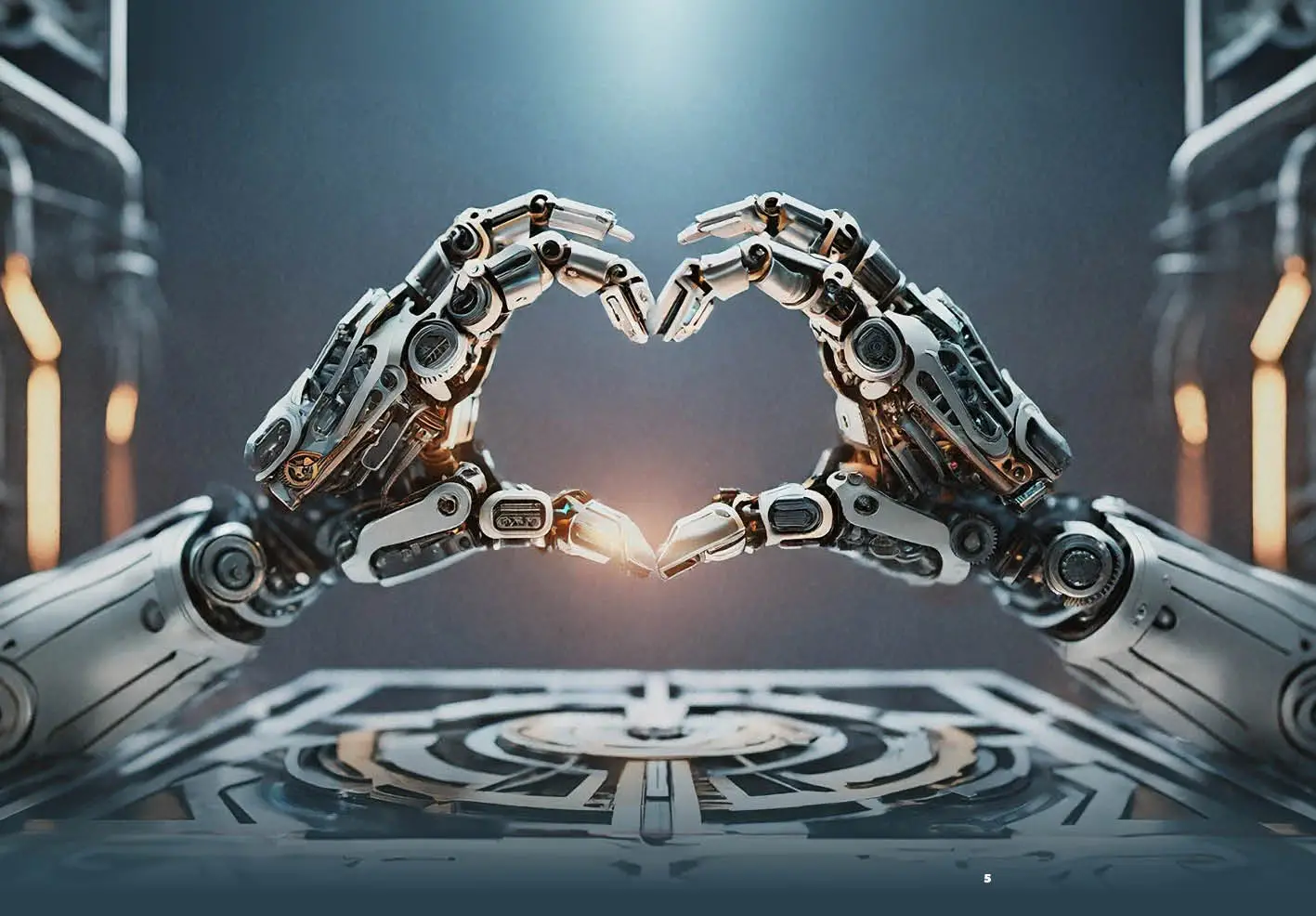

As artificial intelligence (AI) continues to evolve, it presents both opportunities and challenges for organizations. Harnessing AI’s potential while preserving the collaborative and innovative spirit that is synonymous with human work necessitates a shift in both mindsets and organizational design. This delicate balance requires thoughtful integration of technology and a commitment to nurturing the unique qualities that we bring to the workplace.
A paramount shift that needs to happen first of all is around businesses and individuals adopting a growth mindset. Individuals need to embrace continuous learning and be open to evolving their skills. AI is a rapidly advancing field, and staying relevant requires a commitment to ongoing education and adaptability.
Creating an environment where we encourage experimentation can lead to breakthroughs in AI applications.
Creating an environment where we encourage experimentation can lead to breakthroughs in AI applications. Allowing employees to test new ideas without fear of failure promotes a culture of innovation and continuous improvement. Ethan Mollick, a Wharton associate professor, in his recent book called “Co-Intelligence – Living and Working with AI” explores how AI can become an indispensable tool for many professionals. He worked with the Boston Consulting Group to run a study that found that the AI-powered consultants (using popular Gen-AI tools) were faster in their assignments and their work was considered more creative, better written and more analytical. Mollick suggests to “always invite AI to the table, be the human in the loop and treat AI like an intelligent, yet inexperienced inter requiring instruction.”
All AI solutions should be designed with the end-user in mind, ensuring they are intuitive and enhance the user experience. Involving employees in the design and implementation process can lead to more effective and user-friendly AI tools. As noted by Don Norman, a pioneer in user-centered design, “We must design for the way people behave, not for how we would wish them to behave.”
Furthermore, recognizing that change is a constant in the modern workplace can help reduce resistance and foster a more adaptable and resilient workforce. We should be creating a culture where employees view AI as a tool for enhancing their capabilities, not as a threat to their jobs. According to Satya Nadella, CEO of Microsoft, “Every person, organization, and even society as a whole can benefit from the digital transformation powered by AI.” Investing in education and continuous learning programs to help workers acquire new skills relevant to the AI-driven job market.
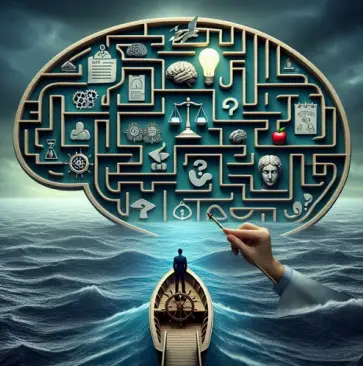
As the AI models evolve, we will also need to consider the importance of ethics in AI deployment that ensures that technology is used responsibly.
Cultivating an understanding of how AI can complement human abilities is crucial. While many view AI as a competitor, I believe we can consider it as a collaborator that can handle repetitive tasks, allowing us to focus on creative and strategic activities.
As the AI models evolve, we will also need to consider the importance of ethics in AI deployment that ensures that technology is used responsibly. Organizations should establish guidelines for ethical AI use, considering implications for privacy, bias, and accountability.
Also, maintaining a human touch in interactions, or as it’s called “a human in the loop” especially in customer-facing roles, is essential. AI models can handle data analysis and pattern recognition, but empathy and emotional intelligence are uniquely human traits that enhance customer and employee experiences. As Sherry Turkle, MIT professor and author, points out, “We are at a moment when our technologies are seductive, but if we are not careful, we can be seduced in ways that diminish us.”
Based on Marc Zao-Sanders’ “HowPeopleAreReally Using GenAI” report for the Harvard Business Review that mined tens of thousands of posts in online forums like Reddit and Quora, researchers at Filtered found 100 kinds of applications of GenAI that fell into six broad categories. “As individuals and organizations experiment with GenAI, use cases around these tools are proliferating… these include content creation and editing, technical assistance and troubleshooting, personal and professional support, learning and education, hobbies and recreation and research, analysis and decision-making.”
Here are a couple of examples of businesses adopting
AI to enhance their customer service, personalize customer experiences, and develop new revenue streams.
Kroger, one of the largest grocery store chains in the United States, uses AI to improve customer experience and operational efficiency. Kroger leverages machine learning and AI services to provide personalized shopping experiences. The system analyzes customer purchase history and preferences to offer tailored product recommendations and promotions. AI services power Kroger’s “smart shelves” that use digital displays and sensors to show real-time pricing and product information. These shelves can also detect when items are low in stock and alert store employees for replenishment.
Walgreens uses AI to provide better healthcare support through its virtual assistant. Walgreens’ chatbot assists customers with healthcare-related queries, appointment scheduling, and prescription refills. The chatbot can handle common inquiries, freeing up pharmacists to focus on more complex tasks.
“The entire point of embracing an AI transformation is to empower your people”
ASOS, a leading online fashion retailer, uses AI to enhance customer experiences and optimize operations. ASOS uses AI services, particularly computer vision, to enable visual search capabilities. Customers can upload photos of clothing items, and the AI matches these images with similar products available on the ASOS platform. Also, ASOS provides personalized product recommendations to customers based on their browsing history, preferences, and purchase behavior, enhancing the shopping experience.
TikTok wanted to enable users to connect and build community around shared topics. To transform the search experience to enable users to more efficiently connect users with content and creators that match their interests. So they launched a conversational bot, Tako, built on GenAI, which enables users to ask questions about content and creators on the platform that may be of interest. Through Tako, TikTok is enabling users to personalize their experience with and discover new content on the platform.
Financial institutions like American Express utilize AI to detect fraudulent transactions by analyzing patterns and anomalies in transaction data. This helps in preventing fraud and protecting customer accounts. Also, companies like ATCT and HP are using AI-powered chatbots and virtual assistants to handle customer inquiries, resolve issues, and provide support 24/7. These tools use natural language processing (NLP) to understand and respond to customer questions, reducing wait times and freeing up human agents for more complex tasks. Finally, healthcare providers are integrating AI to improve diagnostics and treatment plans. For example, AI can analyze medical images to detect diseases earlier and more accurately than traditional methods.
While the scenarios and use cases around AI integrations in the workplace will vary based on the industry, geography, and overall maturity of the AI capabilities, one thing is for sure: this integration should not come at the expense of the ‘human magic’ that drives creativity, collaboration, and innovation.

However, there are some common themes across organizations that have successfully integrated AI into their operations with positive results:
• They started with the business need and problem they needed to solve and then aligned the AI solution(s) to this strategy, not the other way around, adopting technology for its own sake. Leaders need to have a clear vision for how they want to transform or evolve their business and attach AI where it fits to drive efficiencies.
• They invest in skill development across the organization and foster a culture of innovation. As AI is rather new as a technology and rapidly evolving, it is important to increase AI literacy across teams and continue to upskill them along the way. Also, creating a sandbox environment to encourage experimentation, and adopt an agile mindset to fail fast, iterate, and accelerate development is key. This practice is important also for establishing key performance indicators (KPIs) to measure success and ensure there is a clear return on investment (ROI) from the AI technologies leveraged.

• They create an innovation gravity center like a Centre of Excellence to foster collaboration across departments, bring diverse perspectives, and share best practices across various disciplines. They also sponsor this effort with strong leadership involvement to ensure alignment across organizational goals.
By fostering the right mindsets and evolving organizational structures, businesses can harness the benefits of AI while maintaining the uniquely human qualities that lead to breakthroughs and meaningful work. As Daniela Rus, director of MIT’s Computer Science and Artificial Intelligence Laboratory states in her recent book “The TheMind’s Mirror”, “the entire point of embracing an AI transformation is to empower your people” going on to suggest that to best integrate AI into business operations we need to define a data plan, measure for bias and fairness, and develop a feedback loop to understand how employees are reacting to the new technology.
Ultimately, the goal is not to replace humans with machines but to create a synergistic environment where both can thrive. By doing so, organizations can leverage AI to enhance productivity and efficiency, while preserving the collaborative and innovative spirit that only humans can provide. This balanced approach will be key to thriving in the AI-driven future.


