

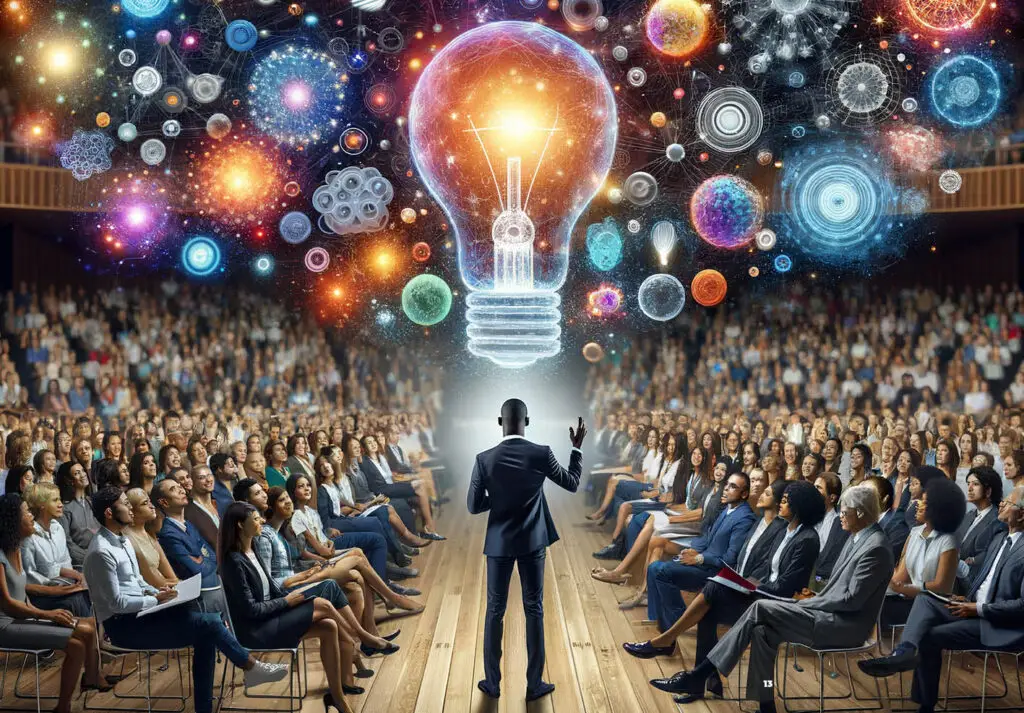





AI is not just a technological advancement; it’s a catalyst that is transforming the way humans relate to themselves and the world around them.
As we rush to embrace this new frontier one that promises the productivity boost we have been waiting for we might want to consider our access to the multitude of intelligence that exist around us and our abilities to synthesize their impact on how we perceive ourselves, our contexts, and our world at large. Could creating a co-intelligent approach be the resolve we are all seeking?
Perhaps. Yet in navigating the complexity of this landscape, we should not forget that we have three super-intelligences at our fingertips machine intelligence, planetary intelligence, and human intelligence which together form a cohesive framework that guides our decisions and actions at work, at home, and beyond.
Machine Intelligence: The Rise of AI
First, let’s talk about machine intelligence. Embodied by AI, it has quickly become a defining feature of the 21st century. From automating routine tasks to predicting complex patterns, AI is reshaping industries and redefining the possibilities of human achievement. Yet, although AI’s capabilities are impressive, they are not without limitations.
We should not forget that we have three super-intelligences at our fingertips machine intelligence, planetary intelligence, and human intelligence which together form a cohesive framework that guides our decisions and actions.
At its core, machine intelligence is about processing vast amounts of data and generating outcomes based on patterns and algorithms. AI excels at tasks that require speed, precision, and the ability for analysis far beyond human capacity. In industries such as finance, health care, and logistics, AI has already demonstrated its potential to streamline operations, reduce errors, and unlock new efficiencies and opportunities.
However, AI’s strengths also highlight its weaknesses. Machine intelligence is inherently linear and cannot understand context, nuance, or emotion. Artist and longtime critic of AI, Trevor Paglen has highlighted how these systems often operate within opaque infrastructures, raising concerns about transparency and accountability. In effect machine intelligence does not sense nor does it sense-make. It can process data, but it cannot interpret the deeper meanings and contexts that often drive human decision-making. AI operates within the boundaries of its programming, making it susceptible to biases embedded in the data it processes. Nuance is still largely lost on AI and it is this limitation in particular that affects outcomes when it is used for decision-making processes that impact human lives, as in hiring, law enforcement, and medical diagnoses.

The role of machine intelligence in our future is not yet clear but we know that it is a powerful tool that can augment human capabilities and drive the speed of innovation. Yet as we integrate AI into our organizations and societies, we must do so within a co-intelligent framework that understands its foibles and vulnerabilities. AI should serve as an enabler, not a replacement, of human intelligence.
Unlike human or machine logic, planetary intelligence operates through a web of relationships, feedback loops, and emergent phenomena all principles that can inspire more resilient and adaptive business strategies.
Planetary Intelligence: Tapping into the Wisdom of Nature
While machine intelligence occupies the forefront of technology, planetary intelligence reminds us of the timeless wisdom embedded in the natural world. Planetary intelligence comprises the interconnectedness of ecosystems, the delicate balance of natural processes, and the organic knowledge that has evolved over millennia. Unlike human or machine logic, planetary intelligence operates through a web of relationships, feedback loops, and emergent phenomena all principles that can inspire more resilient and adaptive business strategies. What would it mean to look beyond our conventional frameworks to seek answers that reshape our perceptions? As leaders, we are often faced with binary decision-making processes if this, then that. When complexity arises, we tend to revert to what we know, to stay where our intellect is most comfortable. But what if we could expand our understanding through lenses we usually overlook? Marshall McLuhan’s idea that “the medium is the message” prompts us to reflect on how our tools such as AI shape our understanding of the world. Integrating the wisdom of nature into our strategies can lead to more holistic and sustainable approaches. Our ability to distill insights from diverse inputs, particularly those from the natural world, is not just an intellectual exercise; it is a strategic advantage that can transform business outcomes and deepen our connections to the markets we serve.
Consider Japan’s Shinkansen Bullet Train as an example of aligning technology with planetary intelligence. Faced with the challenge of reducing noise from sonic booms, engineers looked to nature for inspiration. They studied the kingfisher, known for its ability to dive into water with minimal splash due to its uniquely shaped beak. Mimicking the bird’s form, they reshaped the train’s nose, significantly reducing noise while increasing speed and energy efficiency. How could we envision more imaginative, ethical uses of technology that are effective and respectful of the planet’s needs?
Some of life’s most important decisions can’t be reduced to a simple cost-benefit analysis. Instead, they require to be guided by one’s intuition, values, and a willingness to embrace uncertainty.
This case study highlights how aligning with planetary intelligence, using biomimicry to learn from a process in nature, and looking beyond human or machine logic can lead to more intentionally designed solutions. Nature’s solutions, honed over eons, are often more efficient, sustainable, and insightful than human-engineered alternatives. By integrating these insights into our strategies, we can solve immediate challenges while creating technologies and systems that harmonize with the natural world, enhancing business performance and rewarding environmental stewardship.
Human Intelligence and Intuition: The Unique Human Aspect
We can harness machine intelligence and even the wisdom of planetary intelligence, but we must not overlook our unique ability to intuit to use our all-too-human intelligence to assess our contexts and act accordingly.

Human intuition is the ability to understand something instinctively, without conscious reasoning. It is the culmination of our experiences, our emotions, and the subtle cues we pick up from the world around us. It is that gut feeling we all know.
For some, intuition comes naturally; for others, it is less familiar. In leadership, it is often seen as unquantifiable and is therefore undervalued. McLuhan’s theories suggest that technology shapes our sensory perceptions, but intuition enables us to navigate complexity and ambiguity. In leadership, intuition helps us make decisions that are beyond the data, anticipate trends based on our sense-making abilities and our past experiences, and relate to everything around us.
The rapid pace of technological development often outstrips our ability to fully understand its consequences.
We now know that the heart and brain communicate, influencing each other’s function. The heart sends signals to the brain that can affect emotional processing, decision-making, and overall well-being. So, to fully leverage human intuition, we must cultivate it as a skill. This means creating environments that encourage reflection, mindfulness, and the convergence of various perspectives. It also means recognizing intuition’s value in decision-making and giving it equal weight alongside data and analysis.
In his book, Wild Problems, Russ Roberts talks about Charles Darwin’s significant personal dilemma:
Whether or not to marry. Darwin, known for his scientific rigor and analytical mind, methodically approached this decision, listing out the pros and cons of marriage. Roberts uses Darwin’s decision-making process as an example of how even the most rational and logical thinkers struggle with decisions that have no clear, calculable answer to what Roberts refers to as „wild problems.“ These are the types of problems that don’t have a definitive right or wrong answer and often involve weighing intangible factors like happiness, fulfillment, and personal values.
Roberts uses this example to also argue that some of life’s most important decisions can‘t be reduced to a simple cost-benefit analysis. Instead, they require to be guided by one‘s intuition, values, and a willingness to embrace uncertainty. What could Darwin’s decision-making process look like if he approached it with co-intelligence in mind?
Co-Intelligence: The Interplay of the Three Intelligences
In practical terms, this means integrating these intelligences into the fabric of our organizations, communities, and societies. For example, AI can predict natural disasters, but it is human intuition that is required to mobilize communities and coordinate responses. Planetary intelligence guides our understanding of ecosystems, AI helps optimize resource use, and human intuition drives ethical decision-making.

The synergy among these intelligences suggests profound implications for creating new inventions, products, and ways of enhancing our relationship with technology. By combining AI’s analytical power, planetary intelligence’s sustainability principles, and human intuition’s creativity, we can develop solutions that are not only effective but also ethical and sustainable.
However, achieving this synergy requires a conscious effort. It is up to us to consciously design systems and processes that facilitate co-intelligence the collaboration among machine intelligence, planetary intelligence, and human intuition. This includes developing AI technologies that are transparent and explainable, promoting cross-disciplinary learning that bridges the gap between technology and nature, and fostering cultures that value both data and intuition.

Ethical Implications and Future Considerations
As with any technology, integrating these three intelligences raises ethical questions. AI’s potential to disrupt industries, economies, and societies is enormous, and we must ensure these disruptions don’t come at the cost of human dignity or environmental sustainability.
One key ethical challenge is the potential for AI to exacerbate existing inequalities and biases. As AI becomes more embedded in decision-making, those who control it may gain disproportionate power. What would it mean to include fairness, transparency, and accountability as part of the governance processes that we create?
Another ethical consideration is the need to preserve the integrity of human intuition. We are creating a world where AI can increasingly mimic human behavior, and for this reason, we have to not only be careful not to lose sight of the unique qualities that make us human but also to create parameters that keep us aware of the context of the technologies we use. What would it mean to consciously set up ways of keeping ourselves and our technologies “in check”? How could we begin to value empathy, creativity, and ethical reasoning as much as we value data and efficiency?
Lastly, consider the long-term impact of AI on the planet. The rapid pace of technological development often outstrips our ability to fully understand its consequences. As stewards of both technology and the environment, our responsibility is to ensure that AI is developed in a way that supports the health and resilience of the planet.
As we move forward into the age of AI, we stand at a crossroads. We have the opportunity to harness the power of machine intelligence, the wisdom of planetary intelligence, and the unique insights of human intuition to create a future that is not only innovative but also ethical and sustainable, but this future will not happen by itself. It requires a conscious effort to integrate these three intelligences into our decision-making processes, our organizational cultures, and our societal structures. It requires us to ask difficult questions, challenge our assumptions, and embrace the complexity of the world around us.
By doing so, we can ensure that AI serves as a tool for human flourishing, that our technological advancements are aligned with the needs of the planet, and that our intuition remains a guiding force in the decisions that shape our future. In this new era, the balance of machine intelligence, planetary intelligence, and human intuition is not just a possibility it is a necessity. The choices we make today will determine the world we leave for future generations. Let us choose wisely.


